VOX
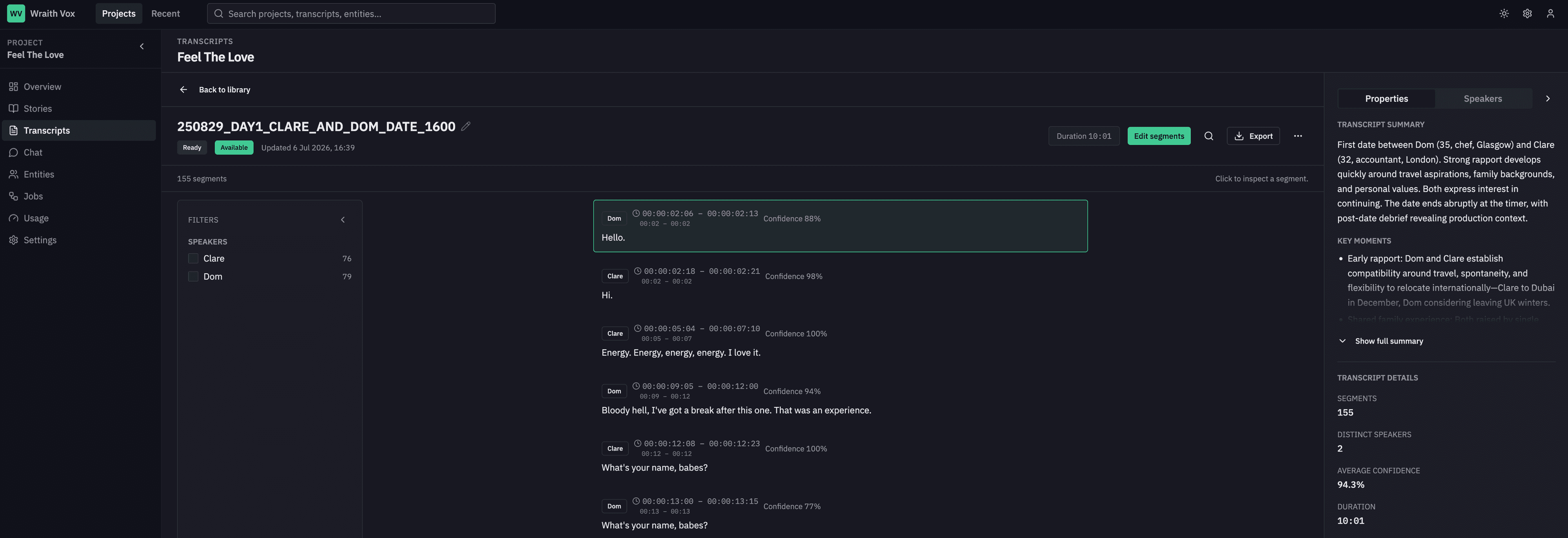
VOX transcribes recorded speech, identifies who is speaking, and turns it into a project you can search and question.
Powered by MediaWR's FusionASR technology, VOX is tuned for the hard cases: unscripted, multi-speaker production audio. Every speaker is given a globally unique voice fingerprint, recognised wherever that voice appears, from a single shoot day to an entire archive. Transcripts, notes, stories and metadata stay bound to the media they came from, so the whole production can be questioned in plain English, and every answer cites its source, down to the timecode.
Why VOX
FusionASR
VOX is transcribed by FusionASR, MediaWR's own speech recognition engine. It recognises the speech, works out who is speaking and timestamps every word, and returns one speaker-aware transcript. More about FusionASR.
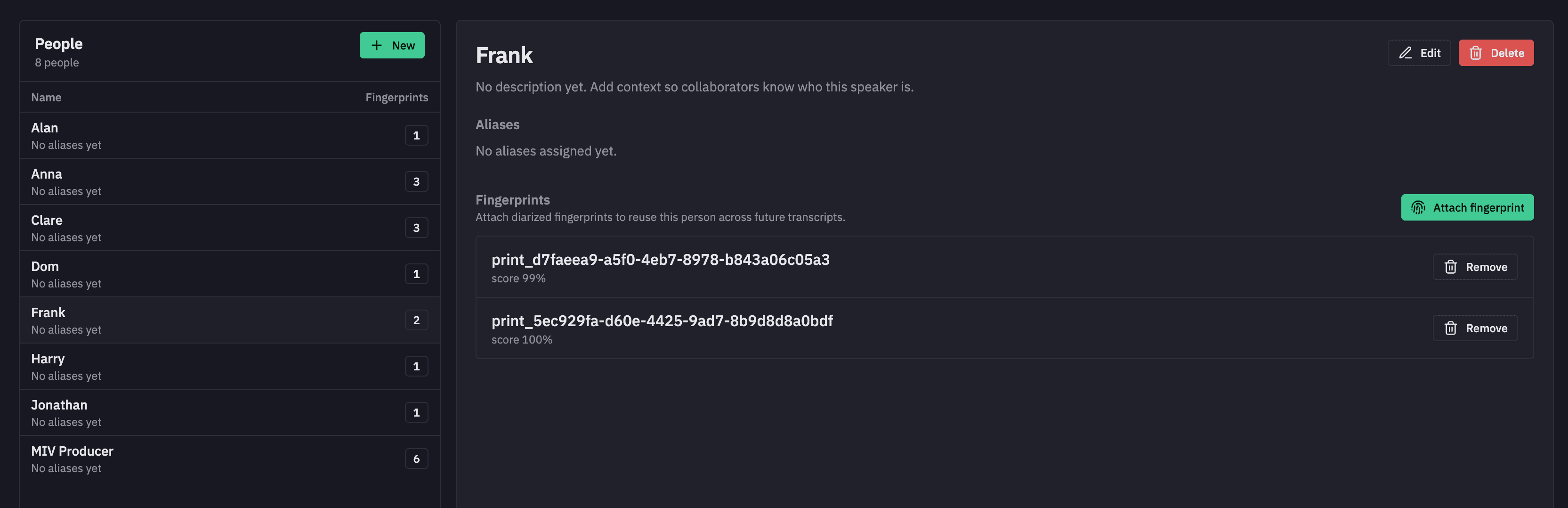
Persistent voice fingerprints
One fingerprint database can span everything you run, or be scoped to a single project. Either way, name a speaker once and that identity follows them through interviews, shoot days and archives, building a history as the library grows.
Ask your project
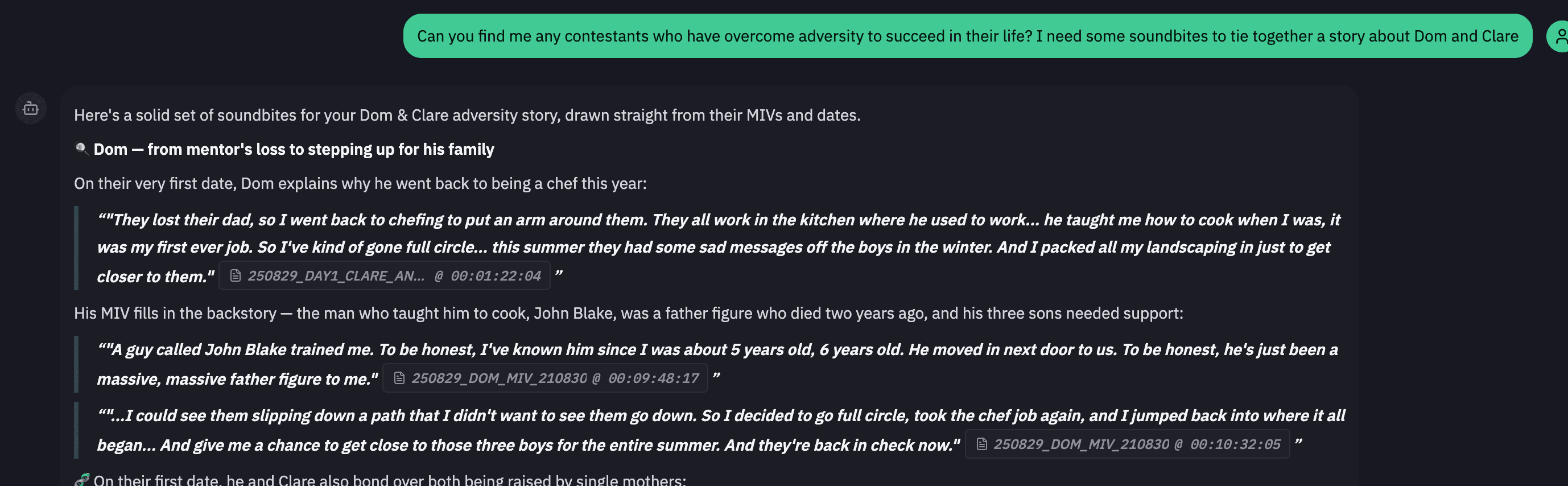
Ask in plain English. VOX searches transcripts, notes, stories and metadata together, and an answer can draw on moments from several recordings at once.
Story mode
Play a recording and pin notes to the timecode as you go. Notes gather into stories, and those stories become searchable material like everything else: ask about one and VOX connects your notes with the corresponding transcript and media.
Runs on your own hardware
Deploy VOX on your own compute and keep media, transcripts and speaker data inside your environment. No SaaS, no per-minute charges, and nothing leaving your network.
Part of the Wraith suite
VOX is tightly integrated with the rest of the Wraith suite. REALTIME can ingest live sources straight into VOX, and FORGE workflows can ingest recorded media automatically.
Ask your production
Ask VOX about a contributor, storyline, theme or event and it searches across the project, connects the relevant moments and builds an answer. Every finding links back to the recording, the transcript and the timecode it came from.
Use it to investigate how a story developed, compare what contributors said across different recordings, find earlier context for a later event, or explore an idea without knowing the exact words that were used.
Use cases
Story and theme discovery
Explore storylines, themes and ideas across an entire production. Ask editorial questions in natural language and find relevant material even when the same idea was expressed in different words.
Searchable rushes and recordings
Timecoded, speaker-aware transcripts of everything you shot, ready for review, logging and the edit. Search them by person, subject, phrase or meaning, with every result linked back to the source media and timecode.
Contributor histories
Follow what a contributor has said across interviews, shoot days and source files. Find earlier context, changing positions, contradictions and related conversations.
Editorial continuity
Story mode keeps producer notes, logger observations, transcripts and source material connected, so knowledge developed during production carries forward into post-production and the edit.
On-set research and interview preparation
Review what contributors have said across previous recordings while filming is still underway. Use their wider recorded history to prepare follow-up questions and investigate developing stories.
Archive intelligence
Add transcription, speaker identities and conversational search to existing collections, turning recorded content into something you can search and question without trawling through it by hand.
Bring us your material
VOX is easiest to judge on material you already know. Send us a representative recording and a few questions your team asks, and we'll show you what VOX finds in it.
Book a demo